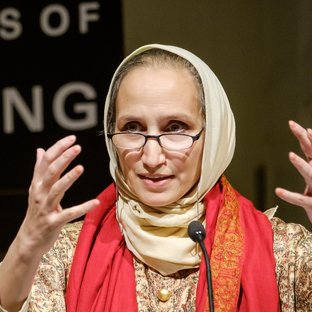
Professor Tahera Qutbuddin
Biography
Originally from Mumbai, I earned a BA and Tamhidi Magister from Ain Shams University, Cairo, and a PhD from Harvard. I taught briefly at Yale and the University of Utah, then for two decades at the University of Chicago.
Since July 2023, I am AlBabtain Laudian Professor of Arabic in the Faculty of Asian and Middle Eastern Studies at Oxford, and a Professorial Fellow of St John’s College.
Teaching
I teach classical Arabic literature from its oral beginnings in the 7th century to the cusp of modernity around 1800, seeing it as a direct window into the rich culture and thought of the vast medieval Arabic-speaking world.
My undergraduate and postgraduate classes include broad surveys of prose and poetry, as well as focused studies of themes and genres. One of the joys of being at this stellar institution is the opportunity to work with insightful and curious students!
Research Interests
I study classical Arabic literature and Islamic studies, focusing on intersections of the literary, the religious, and the political in poetry and prose. Over the years, I’ve ranged across several fields – orations of Imam Ali; ethical hadith of the Prophet Muhammad; Fatimid and Tayyibi-Bohra poetry, history, theology, and law; literary features and symbolic exegesis of the Quran; classical Arabic women’s orations and poetry; and the history, functions, and literary genres of Arabic in India – what connects them all for me is the beauty of their language, and their grounding in themes relating to virtue and character and deep meaning-of-life issues.
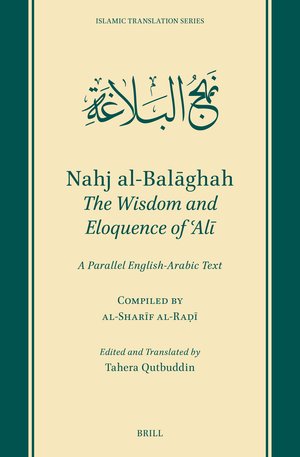
My most recent book is Nahj al-Balāghah: The Wisdom and Eloquence of ʿAlī (Brill, 2024), a critical edition and translation of the celebrated compendium of orations, letters, and sayings of ʿAlī ibn Abī Ṭālib (d. 661) compiled by al-Sharīf al-Raḍī (d. 1015). Long regarded as a masterpiece of Arabic literature and Islamic wisdom, Nahj al-Balāghah has been studied and memorized for over a millennium. It presents ʿAlī’s life and struggles in his own voice, together with reflections on piety, virtue, and just and compassionate governance. My edition is based on the earliest eleventh-century manuscripts and is accompanied by a carefully annotated, facing-page English translation that aims to be both lucid and faithful to the Arabic. I hope it brings alive to the modern reader the power and beauty of this enduring work.